
Trip planning
What Winter in Nazaré Is Actually Like
17 September 2026 · 7 min read · By Surf Nazaré editors
Last updated
Big-wave season means big-storm weather. Month-by-month temperatures and rainfall, what the clifftop actually feels like, and exactly what to pack.
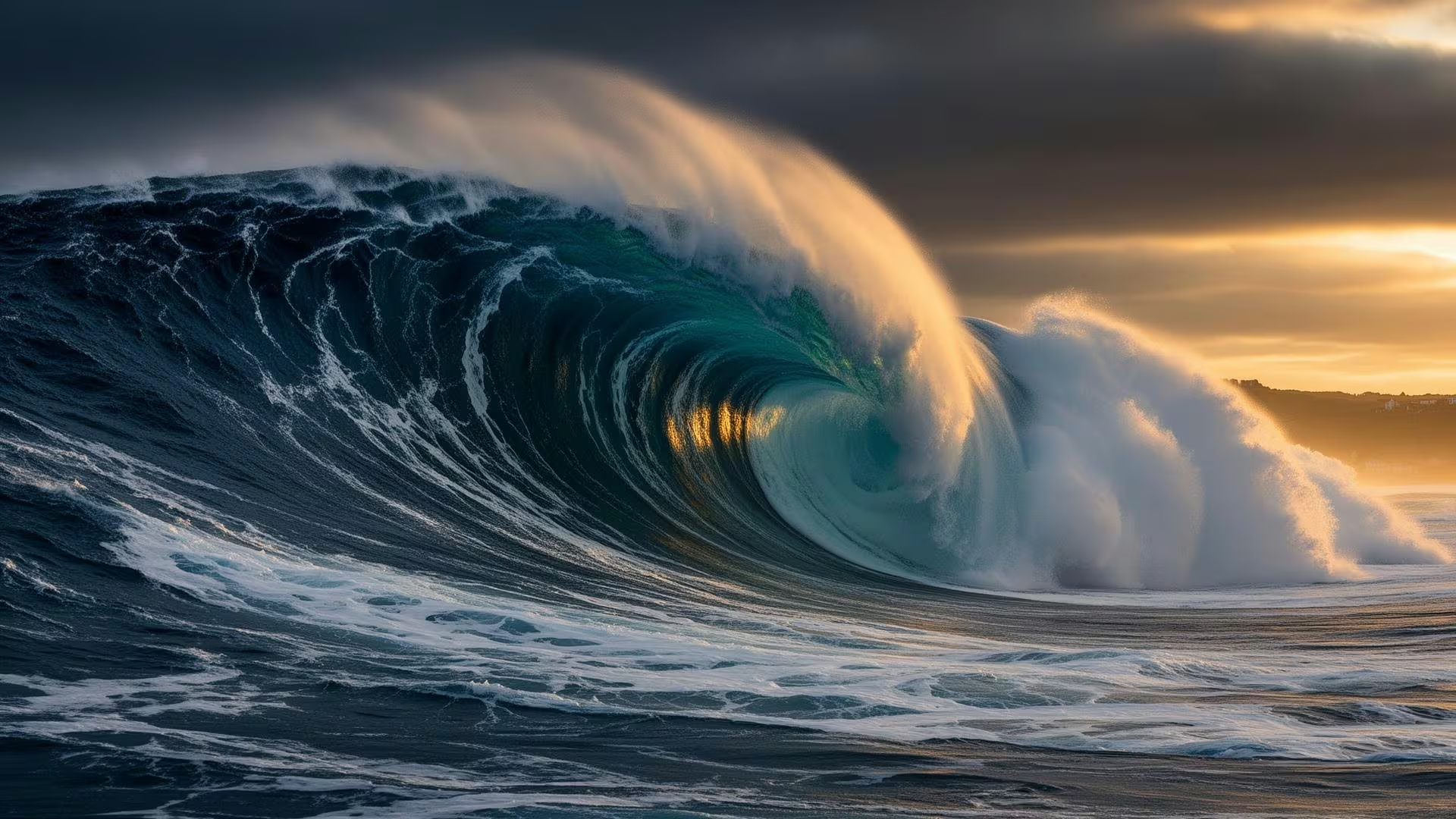
Big-wave season and storm season are the same season — that's not a coincidence, it's the whole mechanism. The Atlantic low-pressure systems that send long-period groundswell into the Nazaré Canyon are the same systems that bring wind, rain and grey skies to the clifftop. If you're visiting between October and March to watch the giants, you're signing up for genuine Atlantic winter weather, not a beach holiday with occasional big surf. Here's what to actually expect, month by month, and what to pack.
Nazaré's climate in one line
Nazaré has a Mediterranean climate — hot, dry summers and mild, wet winters — but its position directly on the Atlantic coast means more wind and more changeable conditions than inland Portugal. Expect weather that shifts through the day: sun, cloud, a rain band, then sun again, all before lunch.
Month by month
- October — Still mild, with highs commonly in the high teens to low 20s°C (mid-to-high 60s°F) and the sea near its warmest of the year. The season is just starting; treat this as a shoulder month for both weather and swell.
- November — The wettest month of the year, with around 12 rainy days on average. Temperatures start to drop and the first serious storm systems arrive.
- December — Average highs around 14.5°C (58°F), lows around 8.8°C (48°F), with roughly 9 rainy days and 47 mm of rain. Prime big-wave season begins.
- January — The coolest month on paper: highs around 13.7°C (57°F), lows around 8°C (46°F), and the most rainy days of the winter (around 12).
- February — Similar temperatures to January (highs around 14.3°C / 58°F), one of the rainiest months, and historically Nazaré's most record-heavy month for big waves.
- March — Mornings still cool (around 11°C / 52°F) warming to around 15°C (59°F) by afternoon. The sea is at its coldest of the year here, even as air temperatures start to climb. The season is winding down but surprise swells still arrive.
What it actually feels like on the clifftop
The numbers above are air temperature in town, sheltered by buildings and streets. The viewing platform at the lighthouse fort is a different environment entirely: fully exposed to the Atlantic, with wind that's often noticeably stronger and colder than what you felt walking up from Sítio. On a big swell day, that same storm system driving the waves is usually also driving 25–40 km/h winds straight across the headland. Bring more layers than the town forecast suggests you need.
Rain: expect it, plan around it, don't let it stop you
November through February each average roughly 9 to 12 rainy days, and rain here tends to move through in bands rather than settle in for a full day — you can genuinely get sun, a squall, and sun again within an hour. Because the same Atlantic storms produce both the rain and the swell, some of the most dramatic big-wave days happen under grey, wet skies. Don't let a rainy forecast talk you out of checking the wave conditions — the two aren't the same thing, and a rainy GO day beats a sunny flat one.
Sea temperature: this is a watching season, not a swimming one
Sea temperature bottoms out around 16°C (61°F) in February, its coldest point of the year, having peaked around 22°C (72°F) in August. If you want to get in the water, plan for the warm season (roughly May to October) and our beginner surfing guide; winter at Praia do Norte is strictly a spectator activity.
What to pack
- A proper windproof, waterproof outer shell — a fashion raincoat won't cut it on the exposed headland.
- Warm mid-layers you can add or remove through the day, since conditions swing between sun and squalls.
- A hat that won't blow off and gloves for early-morning viewing sessions.
- Sturdy, closed, waterproof shoes or boots — wet rock and cobbles around the fort get slippery, and trainers soak through fast.
- Sunglasses, for the surprisingly bright glare on clear days between storm systems.
- A dry bag or waterproof phone case if you're bringing camera gear to the clifftop.
- A portable phone charger — cold weather and constant photo/video use drains batteries faster than usual.
The bottom line
Pack for genuine Atlantic winter weather — wind, rain, and a real temperature drop once you're standing exposed on the headland — and you'll be comfortable regardless of what the swell does. Check our forecast guide to decide when to go, then dress for the cliff, not the town.
Compare places to stay in Nazaré →
Surf Nazaré is reader-supported. Some links above are affiliate links, which means we may earn a small commission if you book through them — at no extra cost to you. See our affiliate disclosure for details.
You might also like

Events
The TUDOR Nazaré Big Wave Challenge: Dates, How to Watch, and What to Expect
How the world's biggest wave-riding contest actually works — the holding period, the 24-hour call, where to watch it for free, and what we know so far about the 2026/27 window.
Forecast
How Big Will the Waves Be This Week? Understanding the Nazaré Forecast
Wave height alone doesn't tell you if Nazaré is about to go off. Here's what period, direction, wind and tide actually mean, and how we turn them into a GO / MAYBE / DON'T GO call.
Catch the swell.
Get alerted when the big swells are coming to Nazaré.